

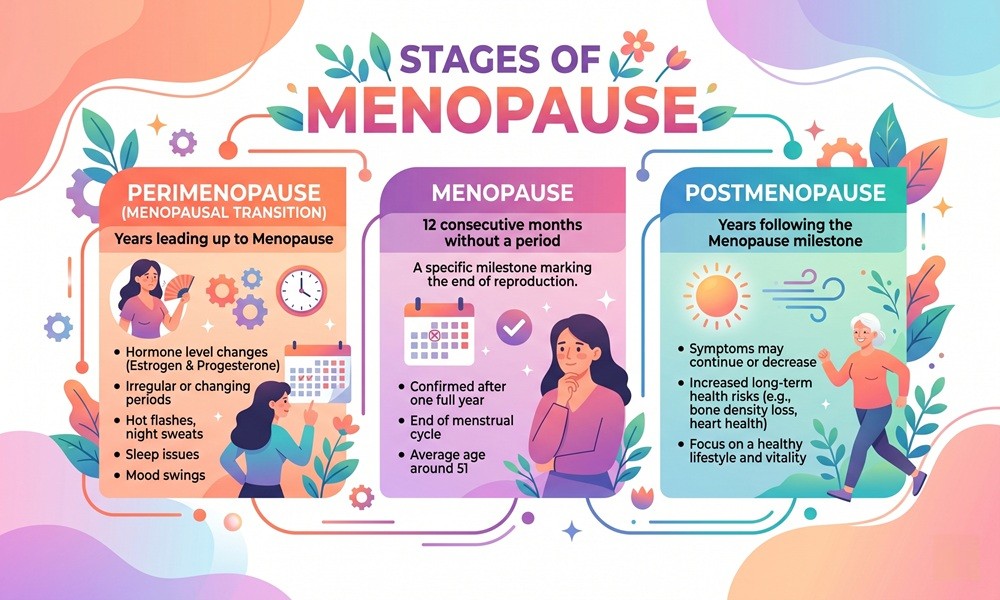
Menopause is often spoken about as a single event – but it’s actually a multi-year process with three distinct stages. Understanding each stage helps you recognize what’s happening in your body and know what to expect next.
The Three Stages of Menopause
|
Stage |
Definition |
Average Duration |
|---|---|---|
|
Perimenopause |
Transition period before menopause; begins with hormonal changes |
2-10 years (average 4 years) |
|
Menopause |
12 consecutive months without a period |
A single point in time |
|
Postmenopause |
All years following menopause |
Rest of life |
Stage 1: Perimenopause
What It Is
Perimenopause – meaning “around menopause” – is when the ovaries begin their gradual decline in estrogen and progesterone production. This doesn’t happen in a smooth, downward slope. Hormones fluctuate dramatically – sometimes producing more estrogen than normal, sometimes very little.
Perimenopause can begin as early as the mid-30s and most commonly starts in the mid-40s, though the average in most populations is around 45-47.
How Long It Lasts
It typically lasts 4-8 years, with some women experiencing as little as a few months and others going through 10 years of transition.
Symptoms
The unpredictable hormone swings of perimenopause cause a wide and variable range of symptoms:
- Menstrual changes – irregular timing, heavier or lighter flow, longer or shorter cycles (this is the first and most reliable sign)
- Hot flashes – sudden waves of heat affecting the face, neck, and chest
- Night sweats – hot flashes during sleep, causing waking and drenching
- Sleep disruption – difficulty falling or staying asleep
- Mood changes – irritability, anxiety, sadness, or emotional instability
- Brain fog – difficulty concentrating, word-finding, or memory
- Vaginal dryness – thinning and drying of vaginal tissue (genitourinary syndrome of menopause)
- Reduced libido
- Joint pain and stiffness
- Abdominal weight gain
- Breast tenderness
What’s Happening Hormonally
Early in perimenopause, estrogen levels can actually spike higher than normal before beginning their long decline. Progesterone often drops first. This estrogen dominance phase can cause particularly heavy periods and breast tenderness.
As perimenopause progresses, estrogen becomes consistently lower, FSH (follicle-stimulating hormone) rises as the pituitary tries to stimulate the ovaries, and periods become further apart.
Stage 2: Menopause
What It Is
Menopause is technically not a phase – it is a moment. A woman is considered to have reached menopause on the day that marks 12 consecutive months without a menstrual period.
The average age of menopause is 51-52, though it can occur naturally anywhere from the late 40s to mid-50s. Menopause before age 40 is called premature ovarian insufficiency (POI). Between 40-45 is called early menopause.
What Triggers It
Natural menopause occurs because the ovaries have depleted their functional follicles (eggs) and can no longer produce sufficient estrogen to trigger ovulation or a menstrual cycle.
Menopause can also be induced by:
- Surgical menopause – removal of both ovaries (oophorectomy); menopause begins immediately and is often more severe
- Chemotherapy or radiation – can damage ovarian function temporarily or permanently
- Certain medications – GnRH agonists used to treat endometriosis or fibroids can temporarily induce menopause
Key Point
If a woman has any bleeding after 12 months without a period, this is postmenopausal bleeding – not a return of periods – and requires prompt medical investigation.
Stage 3: Postmenopause
What It Is
Postmenopause begins the day after menopause is confirmed (12 months without a period) and continues for the rest of a woman’s life. Estrogen and progesterone levels remain consistently low.
Symptoms
Many perimenopausal symptoms improve significantly in postmenopause as hormone levels stabilize. However, some persist:
- Hot flashes – can continue for 7-10+ years after menopause in some women
- Genitourinary syndrome – vaginal dryness, urinary urgency, recurrent UTIs; often worsens without treatment
- Sexual changes – discomfort during sex due to vaginal atrophy
- Bone density loss – accelerates rapidly in early postmenopause (up to 20% of bone mass can be lost in the first 5-7 years)
- Cardiovascular risk – estrogen’s protective cardiovascular effect disappears; heart disease risk rises substantially
Key Health Priorities in Postmenopause
|
Priority |
Why |
|---|---|
|
Bone density |
Loss accelerates; weight-bearing exercise and calcium/vitamin D are essential |
|
Heart health |
Cardiovascular risk rises significantly; manage blood pressure, cholesterol, and weight |
|
Mental health |
Depression and anxiety may continue or emerge |
|
Vaginal and urinary health |
Local estrogen therapy is highly effective and safe |
|
Cognitive health |
Ongoing research into estrogen and dementia risk |
Hormone Replacement Therapy (HRT) Across All Stages
HRT/MHT (Menopausal Hormone Therapy) is one of the most effective interventions across all three stages:
- Perimenopause: Reduces symptom severity, regulates periods, protects bone
- Menopause transition: Most effective when started within 10 years of menopause or before age 60
- Postmenopause: Continues to protect bone density and manage persistent symptoms; benefits and risks should be discussed individually with a doctor
Current evidence strongly supports HRT for healthy women under 60 who are managing significant symptoms – a shift from the previous era when HRT was widely restricted.
Summary Timeline
|
Age Range |
Typical Stage |
Key Events |
|---|---|---|
|
Mid-30s to mid-40s |
Early perimenopause may begin |
Subtle cycle changes, mood shifts |
|
Late 40s |
Active perimenopause |
Hot flashes, irregular periods, night sweats |
|
Early 50s |
Menopause (average 51-52) |
12 months without period confirmed |
|
50s+ |
Postmenopause |
Symptoms stabilize; long-term health risks become priority |
Key Takeaways
- Menopause is a three-stage process: perimenopause (2-10 years), menopause (a single confirmed moment), and postmenopause (rest of life)
- Perimenopause symptoms are driven by hormonal fluctuation, not just decline
- The average age of menopause is 51-52; postmenopausal life can span 30+ years
- HRT is the most effective treatment for symptoms and is supported by current evidence for healthy women under 60
- Postmenopause brings elevated risks of osteoporosis and cardiovascular disease that require proactive management
All articles are for informational purposes only and do not constitute medical advice. Always consult a qualified healthcare provider before making significant changes to your diet, supplement routine, or lifestyle.